5 Reasons Why Consumer Tablets Are Bad for Business

Posted on by Lane Jesseph Posted in Consumerization, Enterprise, IT, Mobility Strategy, Utility


Consumer tablets and eReaders, like iPads and the Kindle, are great for movies and books, surfing the web, and showing off family photos. But in the business world, they’re like the guy who thinks casual Fridays mean pajama bottoms and flip-flops. Or who forwards you cute animal videos every hour. Or who thinks an office pool party would be cool (“I do a mean cannonball, man!”). You get the idea.

The point is that you need a tablet that’s more comfortable in the boardroom than it is at the local pep rally. Here’s my list of reasons why consumer tablets are just bad for business:

Reason 1: They’re high on frivolity, low on functionality.

When the vast majority of the apps on your workplace tablets are games, it’s no fun. You want a tablet that functions as a mobile workstation, one with business-appropriate apps that boost productivity. According to Naked CIO, it’s “impossible for businesses to drive a development and application plan to utilize [consumer tablets] except in a business-to-consumer world but not internally or, in most cases, between businesses.”

Reason 2: Thieves like them.

Earlier this year, buyerzoneblogger posted the following: “Ironically, the same week that Apple boasted that 80% of Fortune 100 companies are currently experimenting with the iPad for business use, an Apple iPad security breach story from June resurfaced in the news. On January 18th, the FBI stepped in to charge two individuals over a security breach that affected over 120,000 Apple users, including CEOs, media company employees, Mayor Michael Bloomberg, government employees, politicians, and the U.S. military. It was reported that email addresses and other personal information were stolen.” Think twice before you use a consumer tablet to store or process sensitive information about your company or customers. At least make sure your tablets can be encrypted and locked remotely.

Reason 3: They drive IT crazy(er).

Consumer tablets often don’t always play nice with back-end systems. Business tablets allow IT administrators to do the voodoo that they do. IT can specify configuration settings in XML files, making it easier for users to connect to corporate networks and be productive more quickly.

Reason 4: Have you tried customizing thousands of them?

Sure, it’s not hard to customize your own device. Play around with the settings and put your favorite photo on the home page.  But imagine you’re an IT department trying to install a corporate image with company-specific applications and settings on hundreds or even thousands of tablets.  Business tablet makers frequently work with enterprise clients to simplify this process.

Reason 5: Their wimpy work ethic.

In short, consumer tablets just can’t do the work that business tablets are capable of. Technology journalist Joanna Stern, in her recent review, sums it up best when she says she wants “a tablet that lets me take my presentations to my clients; install my software in it for making live demos, sketching, and reading books; transfer files by Bluetooth; connect to my network office by open VPN.“

26 Responses to 5 Reasons Why Consumer Tablets Are Bad for Business

  1. BobSmith

    I would have thought this was obvious. Tablets (at least the ones talked about in this article) are overpriced toy computers that have few legitimate work functions. Even a netbook would be more business ready than an iPad or similar.

  2. Crevo Press

    And so-called modern smart phones don’t have the same problem? Even a corporate Blackberry has games, Facebook, Twitter, eBay, Pandora, LinkedIn, etc., etc. apps. Of course, now that corporations are allowing iPhones, this opens the door to even more of the same “abuses” and issues as tablets!

    The problem is not really the technology, but IT departments that don’t have a policy in place concerning personal electronics in the workplace. One need only check Facebook and Twitter to see what employees are doing during the day…

    How many organizations also have employees with 2 cell phones — one issued by the company & another personal, from which to IM, Facebook and tweet throughout the day!

  3. LuisModesto

    Most business software simply doesn’t run on andriod or webos, until a universal and consistant (unchanging) OS is developed then business will keep it’s PC’s + Laptops

  4. Guy-n-Houston

    With Citrix Receiver an iPad or an Android Tablet become desktop extensions. I carry my tablet around the plant and stay connected to email, etc. this way without having to lug my corporate notebook.

    • Stephanie

      It allows mobile executives to stay connected easily and continuously, and this alone is enough raison d’etre for the iPad et al.

  5. teven Lau

    There is also a status symbol associated with the ownership of the tablets in business. Usually the CEO and the top management are first issued (set up by corporate IT support) with the tablets whether they need them or not, or even know how to use them.

    • Rich Emanuel

      I chuckled when reading Lau`s comment. Having been around technology in engineering and marketing for the past 50+ years nothing has changed. The boss gets the new toys first then the real users follow later. I remember in the 60′s when the first TI engineering hand calculator became availabile for $200+ (now about $10). The VP of sales got the first one leaving the engineers lusting for one of their own. I suppose the VP of sales justified his based on his ability to more reliably figure out his expense account. We eventually got ours. Moral of this story – nothing has or will change so be patient and you will get your tablet after upper management has been sated.

  6. Robert Pruitt

    Tablet computers can be very effective in business applications, however it does require a bit of forethought. I have seen both the iPAD and Android based tablets be very effective in the work environment, provided they have the WiFi setup properly and you have installed the applicable VPN and PKI systems on them. Once done, you can interface with other computer systems when checking on status (e.g. injection molding equipment, incubators, etc). Additionally, I have used these devices to put my meeting notes, presentations, etc on and have taken these to conference rooms where I can make these presentations and for taking notes. With a projector and an corporate internet connection, we were able to hold both a local meeting and a video conference with our other offices at the same time, all from our tablet device. Now, I will not say that these devices came pre-setup for this type of usage, only that if you consider the benefits and problems with ANY IT device, you will find that if you put a little forethought into it, you can have a valuable aid vice a problematic device. The tablet is a useful companion to a PC system but it is definitely not a replacement for one. It takes up less space and is highly customizable, therefore in the future you are going to see more usage not less.

  7. David Christiansen

    #3 is a lame reason. Any change drives IT crazy. That’s why the vast majority of people using out-of-date browsers like IE 6, IE 7, or IE 8 are using computers supported by corporate IT.

  8. Joshua Burke

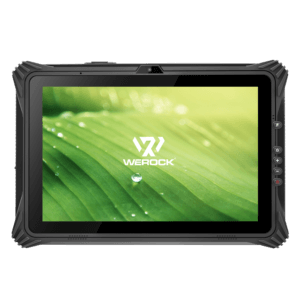
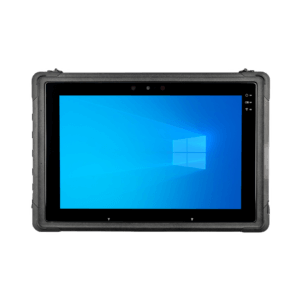
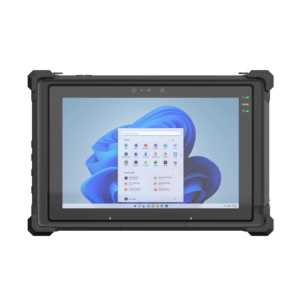
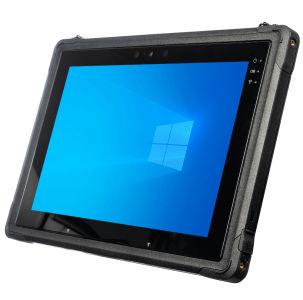
    And, I would ask the question, what exactly is a “business tablet”? I see lots of trash talk about consumer tablets but the author fails to define or point out what might be considered worthy of board-room or office. Playbook perhaps? It’s just as bloated as the rest. Thrive? Probably the closest tool in the shed but its wifi only. I’d be interested to learn what exactly a “business tablet” might be.

    • Jeff

      A business tablet is one that runs Windows. Then IT can manage it exactly like they do any other PC. Posted from my HP Slate.

  9. Cat

    Actually most IT departments have rules, however, they are rarely, if ever consulted about technology after a sales person has talked to a CEO or purchaser of the company. Even if they are consulted, their advice is sometimes ignored.

    • Crevo Press

      Rules? If there are rules, than why aren’t the enforced? So, IT departments are powerless to enforce any security, usage restriction, or control over electronic devices in a business environment??? This is pretty lame.

      • JeffBuzhardt

        Rules enforcement is predicated on the collective backbone of the IT Management Team. Many years ago, as VPIT, we were in a situation where empowered line employees exposed us to a rapidly propagating virus. After the clean-up, we distributed a rule of what not-to-do and a penalty of doing what-not-to-do. Of course, several employees broke the rules and subsequently were denied access to the corporate systems they exposed to infection (of course, we had plugged the virus hole, so that our systems were safe). There were three people in the enterprise who could reinstate their access: myself and the two people directly in my chain-of-command (an SVP and the CEO) (2000 person organization). One rule-breaker called me and asked if I knew who she was. I allowed as to how I did not know her personally, but I knew that she was not the CEO, the SVP, or me. Ultimately, she went to the SVP (directed there by the CEO) to plead her case. After a verbal reprimand for unsafe computing practices directly in violation of posted and duly distributed policies, her access was reinstated.

        Without proper support or backbone, rules are useless. If enforced fairly, equitably, and with proper justification, rules can enable an organization.

  10. TimC

    A tablet is extremely useful as a VNC or logmein tool to reach your otherwise-locked-down desktop PC. Only an idiot would carry around company data on a portable device.

  11. Bala

    The only beneficiaries are field staff – senior execs have little use for tablets. I carry an iPad, a netbook (with 2 gb RAM) and an iPhone with tethering. What I really miss is my Blackberry – and perhaps the BB Playbook is useful after all – it is an extension of the BB and does not have to go through separate IT security!

  12. Jim Schwartz

    The virtual keypads on tablets are too small. Because of the small size, I can’t touch-type with them. I have to do the “hunt and peck” method of typing, losing productivity.

  13. GP

    I guess that would depend a great deal on your business. It’s pretty apparent that the author’s definition of business is slanted towards rather large companies, and perhaps even synonymous with most people’s idea of ‘corporate America’, even though the vast majority of businesses in this country have no ‘boardroom’.

  14. SWC

    Despite the huge success accorded Apple for its success with their i-products – thanks to the fanatical focus from Steve Jobs on delivering an “unavoidable technology romance” first and then followed by a practical lesson on what it might be used for – all from within an almost galactic retail store experience, other manufacturers seem “lost at sea”! For my company presentations, I am fine using my laptop, projector and the internet but Steve didn’t sell me on the iPad for that application. For most suppliers, it’s another “ride down technology lane” because everyone else seems to going that way! Not a strategy embraced by SJ that’s for sure.

  15. Steve

    “Business tablet”: laptop.

  16. Mike

    It not what you have, but how you use it.

    Oh and yes Virginia there is no “business” tablet.

  17. Bill

    Beg to differ… The HP Slate 500(2) is a w7 business tablet, as is the Motion Computer CL900. 3q/4q 2012 we will begin to see windows 8 business tablets.

  18. Exec

    While its true there’s many distractions available on a tablet, using them is a work ethic problem not a technology problem.

    As an executive running from meeting to meeting, it is so much easier to carry a tablet for emails than lugging around a laptop and power supply. Email in the corporate environment is still the killer app. The experience is so much better, that I’ve given up my blackberry in lieu of using a tablet.

    • WWBL

      Gave up your blackberry for a tablet?? why not enhance you blackberry with a Playbook?
      Best of all worlds!

  19. davemiller

    IF ONLY there were a way for a tablet to access data and programs that did not reside on the tablet – we could infinitely extend the utility of the tablet and keep the data safe from thieves….Al Gore had an idea like this…I think he called it the “internet”….hmmmm.

  20. Matt Johnston

    1. Low on functionality? Pardon? Derp?
    2. Thieves like them? Thieves like all technology. And what you refer to  -  was that not an At&T breach?
    3. IT departments will have to wake the hell up. 
    4. Customising thousands? Are you suggesting there are no tools for this?
    5.Wimpy work ethic? Seriously?

    So, by your measure, iPad is a business tablet.

Add a Comment